
- Mon-Fri 9am-5pm
- hello@innodez.com
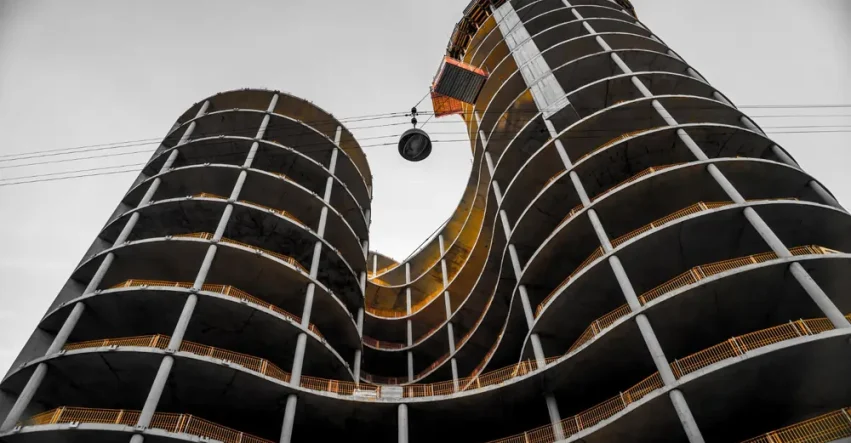
Florida is not California, and that is exactly why seismic design can be overlooked. Most Florida projects fall in low seismic hazard, yet the Florida Building Code still requires you to check seismic loads, confirm the Seismic Design Category, and restrain nonstructural systems. Owners expect code compliance and insurers expect due diligence. Good design turns a low number into a clear, documented strategy that protects life safety without overspending on unnecessary measures.
Older codes used simple seismic zones. Modern practice uses probabilistic ground motion maps developed by the USGS that estimate shaking with specific probabilities of exceedance across different return periods. These maps feed the ASCE 7 equations that structural engineers use to determine spectral accelerations and design forces. The result is a more accurate, location based picture rather than a blunt zone. If you last looked at seismic in the era of UBC zone maps, the methodology has moved on.
For primary references on current hazard values and map methodology, see the USGS Earthquake Hazards Program (https://earthquake.usgs.gov/) and the ASCE 7 standard overview (https://asce.org/).
The Florida Building Code adopts the International Building Code framework and references ASCE 7 for load determination. Depending on edition, Florida jurisdictions may be on ASCE 7 16 or moving to ASCE 7 22. Your drawings must compute the mapped spectral accelerations, apply site coefficients based on geotechnical data, assign a Risk Category, and determine the Seismic Design Category. Even when the math ends in Category A or B, you still document the process and you still anchor components that could fall, slide, or rupture.
Mid article resources if you need broader context. For structural scope alignment and building system integration, review InnoDez Florida Structural Engineering services at https://fl.innodez.com/services/ and browse related technical pieces on the InnoDez Florida Blog at https://fl.innodez.com/blog/.
Florida geology is different from high risk states. Many sites have deep deposits of sands and clays over limestone. The geotechnical report will classify your site as A through E or F based on stiffness and shear wave velocity. That classification changes your site coefficients and therefore your design forces. Liquefaction potential is usually low to moderate in much of Florida, yet reclaimed or saturated sands may warrant checks, especially near waterways. Sinkholes are a separate geohazard driven by karst dissolution rather than earthquakes. They do not raise seismic forces, but they can govern foundations and differential settlement. Treat each hazard on its own terms and keep your structural notes clear about which checks were performed.
Most standard occupancy buildings in Florida will fall in SDC A or B. That typically means no special seismic detailing for ordinary moment frames or shear walls beyond the base code, and it often aligns with wind governing the lateral design. Critical facilities such as hospitals can land in Risk Category IV and may move into higher SDCs depending on site class, which triggers additional detailing, special inspections, and component bracing rules. Do not assume low hazard automatically equals minimal requirements. Let the calculations and the geotechnical data lead you to the correct SDC, then select systems that meet both wind and seismic demands cleanly.
Florida projects are rightly dominated by wind and flood discussions, yet nonstructural restraint under seismic loads still appears on inspection punch lists. ASCE 7 Chapter 13 requires anchorage and bracing of equipment, ceilings, piping, and electrical raceways above certain weights and heights. The best time to solve this is in coordination. If the structural team provides standard anchorage details and allowable loads, the MEP team can select supports and braces that satisfy seismic, wind, and vibration simultaneously. That approach avoids last minute add ons and it prevents conflicts with architectural finishes. It also gives owners a single, consistent story for inspectors and insurers.
Consider a two story office in Polk County. The geotechnical report classifies Site Class D. The mapped spectral accelerations from the current USGS data set lead to design spectral acceleration values that place the building in SDC B for Risk Category II. Wind controls the lateral system design, so the structure uses steel moment frames designed for hurricane level pressures, with drift checks under service wind. Seismic forces are still computed and included on drawings. Nonstructural restraint is coordinated early. The mechanical engineer details rooftop unit curbs with tested anchors sized for the combined wind uplift and seismic shear. Suspended piping in the mechanical room receives transverse and longitudinal braces per ASCE 7 thresholds and spacing. The electrical engineer coordinates seismic rated supports for heavy switchgear, while lighter conduits rely on standard trapeze supports verified against the allowable loads the structural team provides. The result is a clean permit review, fewer field questions, and a consistent as built record.
Seismic design in Florida is a small part of the load picture, yet it is still part of the code path. Treat it with the same clarity you bring to wind and flood. Use current hazard maps, respect site class effects, and document the Seismic Design Category. Coordinate nonstructural restraint so MEP supports satisfy seismic and wind together. That combination yields faster plan checks and fewer site surprises.
If you want to see how a disciplined load path shows up in real work, browse InnoDez Florida Projects at https://fl.innodez.com/innodez-projects/ and if you are ready to line up calculations and coordination for your building, reach the team through the InnoDez Florida Contact page at https://fl.innodez.com/contact/.


