
- Mon-Fri 9am-5pm
- hello@innodez.com
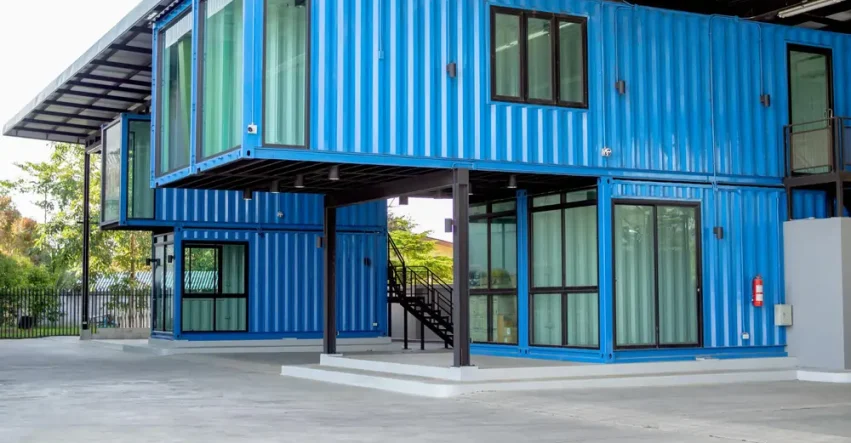
Florida is a natural test track for residential innovation. Heat, humidity, hurricanes, termites, and flood risk make the state both demanding and rewarding for smart homebuilding. That is why interest in Shipping Container Homes continues to rise here. Containers promise speed, durability, and a compact footprint that suits infill lots and accessory dwellings. The reality is that success comes from engineering and permitting as much as it comes from design style. This guide explains how to take a container concept from sketch to a Florida code compliant, storm ready, comfortable home.
Containers are strong weathered steel boxes designed to stack nine high at sea. That strength and modularity are an advantage in a wind prone state. The challenge is turning a steel box into a healthy, conditioned dwelling. Florida’s humid climate drives moisture in through every crack and builds condensation on cold steel if the enclosure is not detailed well. The good news is that with the right structural detailing, thermal control, and mechanical design, a container can meet Florida Building Code requirements and deliver a quiet, efficient interior.
Every container project must pass the same building rules as a conventional home. Your local jurisdiction will apply the Florida Building Code Residential or Building, along with wind design per ASCE 7, energy requirements, and fire provisions. Coastal areas may add higher wind speeds and specific impact protection. Communities with design review will look at scale, height, and street presence. Before you draw the floor plan, verify whether your site is in a flood zone and whether accessory dwellings or tiny homes are allowed on your parcel. The Florida Building Commission provides code access and updates at floridabuilding.org. For flood status and base elevations, start with the FEMA map service at msc.fema.gov.
Plan review teams will ask for sealed drawings that show structure, foundations, wind design, energy compliance, plumbing, mechanical, electrical, and a life safety plan. Submittals are smoother when the set looks like a conventional house plan even if the core modules are steel.
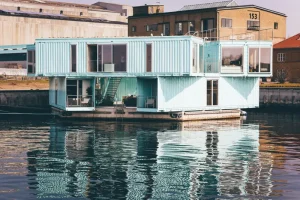
The corner posts and upper rails of a container carry the heavy loads. Once you cut large openings for glazing or module connections, you must frame new load paths. A light steel or LVL frame ringed inside the container can keep the shell strong while allowing big windows. Roof decks, overhangs, and stair towers add wind loads, so tie them into a structural backbone rather than relying on the original corrugated skin. For coastal wind zones, specify hold-downs and anchor bolts sized to uplift. Miami-Dade approvals for impact glazing and roof coverings can be helpful across the state because many officials trust those test standards.
Corrosion control is a long term issue. Factory coatings are not designed to be the final building envelope. After cutting and welding, clean and prime edges, then use a rainscreen approach that puts a ventilated cladding outside a continuous air and water barrier. This keeps the steel warm and dry, which prevents condensation and rust. Where the steel remains exposed, use high build epoxy primers and compatible top coats, especially within a few miles of salt water.
Comfort in a container home lives or dies by its building services. The metal shell responds quickly to sun, so thermal control and air sealing are critical. Continuous insulation outboard of the steel solves two problems at once: it limits thermal bridging and moves the dew point away from the interior finish. In Florida we prefer an exterior continuous layer plus strategic interior insulation where services need it. Spray foam directly to steel can trap moisture if not detailed with care, so use it only where the risk is understood and the assembly can dry to at least one side. A compact ducted heat pump or high efficiency mini split keeps cooling loads in check. Balance that with a fresh air strategy. An ERV brings in outdoor air while managing humidity, which is vital for healthy interiors in our climate.
If the design includes an outdoor kitchen, a laundry alcove, or a roof deck, coordinate power, water, drainage, and lighting early. Running new penetrations through steel is straightforward when planned, but painful if improvised during construction. For coordinated service layouts and energy calculations, our Florida team can help you avoid rework and pass plan review the first time. Explore MEP support here: InnoDez Florida MEP Engineering.
Containers are rigid modules, but the ground below Florida homes is rarely uniform. Shallow foundations may be adequate inland on competent soils, while coastal sites or organic soils can need helical piles or deeper supports. The key is to design for both gravity and uplift. Containers must be anchored against sliding and lifting in high winds, with connections that resist corrosion over time. If your lot touches a flood zone, raise the lowest floor to the required elevation and use flood-damage resistant materials below that line. Ground level storage or carports can live under elevated modules if designed with breakaway construction.
Drainage around the home matters just as much as the steel details. Positive grading, roof water management, and clear splash zones keep the module connections dry. A narrow overhang or screen porch can shade south and west walls, cut cooling loads, and protect doors from heavy rain.
Compact dimension is the main constraint of a container. That is why the best designs focus on volume and sight lines rather than packing in too many rooms. Connect two modules offset by a few feet to create a light well. Use a full height glass wall at the end of a long view. Run the ceiling boards along the long axis to stretch the space visually. Exterior screens or a pergola can add outdoor rooms that double the perceived size without heavy structure.
Finishes should be simple and bright. Keep the interior palette to two tones with one accent, and let daylight do the rest. At night, layer task and ambient lighting rather than relying on a single bright fixture. In Florida, screened porches are worth their square feet. A screen room aligned with prevailing breezes gives you bug free evenings and protects sliders from wind driven rain.
Most schedules follow a predictable rhythm. Feasibility and zoning check, survey and geotech as needed, schematic design, engineering, energy documentation, permit set, and procurement. If you are fabricating modules off site, permit the foundation early so ground works can start while the shell is being built in the shop. Keep a clear list of inspections for foundations, tie-downs, framing, rough services, insulation, impact glazing, mechanical startup, and final. Shop fabrication does not remove the need for local inspections. It simply moves some work into a weather controlled environment where quality can be higher and waste lower.
Myth: A container home is just a box with windows. Truth: it is a steel structure that needs the same level of engineering as a conventional house, plus attention to thermal bridging and corrosion.
Myth: Containers are always cheaper. Truth: speed and repetition can lower costs, but cutting, reinforcing, and finishing can match conventional budgets, especially when impact glazing and coastal detailing are required.
Myth: Steel equals hot and loud. Truth: with continuous insulation, airtight detailing, and resilient floor layers, interior comfort can be excellent.
Shipping Container Homes can perform beautifully in Florida when the design answers climate and code with the same care given to layout and finishes. Start with wind and flood strategy. Keep the steel dry and warm. Choose a right-sized mechanical system with controlled ventilation. Plan penetrations and wiring before the first cut. When you are ready to move from ideas to a buildable set, our engineers can coordinate structure, foundations, energy documentation, and service layouts for a clean permit path. See how we approach modular and steel projects on our Florida portfolio and reach out to discuss your site, program, and goals: InnoDez Florida Contact. For heavy openings, stacked modules, or elevated foundations, our structural group is ready to assist here: InnoDez Florida Structural Engineering.


