
- Mon-Fri 9am-5pm
- hello@innodez.com
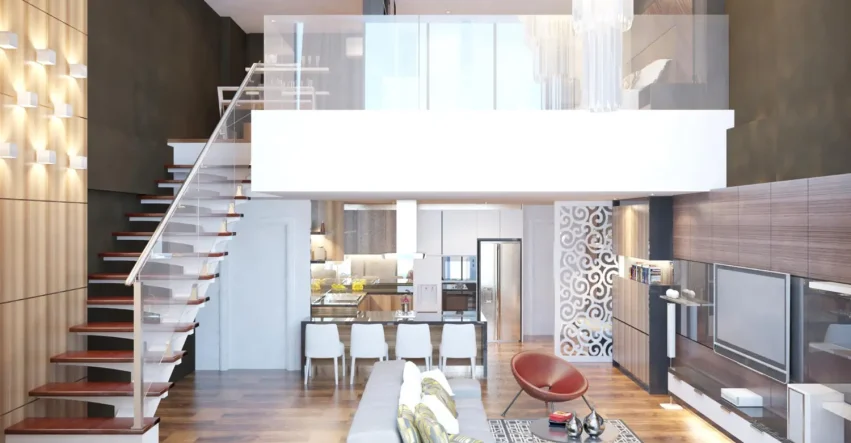
Mezzanines unlock cubic volume that already exists inside the shell. In Florida, where wind design and site limits can push new construction, adding an intermediate platform often beats expanding the footprint. Clear height in tilt wall or pre engineered metal buildings makes platform offices, storage decks, showrooms, and collaboration space feasible with modest disruption. Done well, a mezzanine is quick to permit, fast to install, and straightforward to maintain.
The Florida Building Code adopts the International Building Code framework. A mezzanine is an intermediate level that remains open to the room below and is not a full story. That definition guides design. Keep the aggregate mezzanine area within the fraction of the room allowed by code when openness and access conditions are met. Maintain visual openness along the edge with guards rather than solid fronts so the level does not behave like a story. Provide headroom of at least 7 feet above and below in occupied areas. Match use and occupancy to the program since storage decks in Group S follow different rules than office space in Group B. Always confirm the current FBC edition with the authority having jurisdiction and coordinate early on sprinklers and detection.
External references for primary rules: the International Code Council overview for IBC mezzanine provisions at https://www.iccsafe.org/ and Florida Building Commission resources at https://floridabuilding.org/.
Storage platforms often require 125 psf live load or more depending on the program while office decks typically use 50 psf plus partitions. Framing may be structural steel with metal deck, cold formed joists, or heavy timber. Connections to the primary frame must respect hurricane level wind drift so the platform neither binds nor pounds. Comfort is the target long before strength. Choose span to depth ratios that keep natural frequencies out of the footfall range and specify tight shear connections so nothing chatters under light steps.
Calculate occupant load by use, check travel distance, and provide one or two stairs as needed. Where occupant load exceeds ten or travel is long, a second exit is likely required. Follow code tables for risers, treads, and landings. Along open edges, provide 42 inch high guards with intermediate elements that limit a 4 inch sphere for most occupancies. For storage only, industrial guard openings may differ so confirm with the AHJ.
Openness makes a mezzanine a mezzanine, which also means smoke from the room below can reach the platform. Coordinate sprinkler coverage, detection, and any draft curtains so tenability is maintained. In sprinkled buildings, extend sprinklers below the deck and above if the ceiling plane is affected. Avoid solid fronts that turn the edge into a wall. If separation is needed, consider glass guards where accepted so openness is preserved while limiting fire spread. Place exits so occupants move quickly off the platform and into protected paths.
Duct routes, diffusers, lighting, and sprinklers should be planned with the edge condition in mind. Supply air to the upper level can stratify in Florida heat without careful placement and defined returns. Task lighting under the deck needs glare control. Penetrations through the deck must be sealed for fire and acoustics and guards should not become cable trays.
For broader building system context and coordination examples, explore InnoDez Florida services at https://fl.innodez.com/service/mep-engineering/ and browse detailed articles on the InnoDez Florida Blog at https://fl.innodez.com/blog/.
In warehouses, a platform office keeps supervisors near the floor while preserving lanes. In retail, a small mezzanine can frame a double height showcase and add back of house storage in the same volume. In offices, a partial second level creates quiet focus space without losing the drama of a tall room. Each case demands tailored live loads, stair counts, and guards plus acoustic treatment so the upper level does not echo.
Florida homes with vaulted spaces can gain reading nooks, sleeping lofts, or hobby platforms with light steel or wood framing. Keep headroom, stair geometry, and guard safety in view. Plan mechanicals early so supply air reaches the loft without short circuiting returns. Daylight is both gift and glare in long sunny afternoons so combine skylight shades with low glare fixtures.
Submittals typically include a code summary that labels the platform as a mezzanine, lists occupancy, live loads, openness compliance, and egress. Structural drawings show member sizes, connections, anchorage to the slab or frame, and any special inspections. If a pre engineered mezzanine is used, shop drawings still reference project loads and drift criteria. Many Florida jurisdictions move interior platforms quickly when the code path is clear and drawings read cleanly.
A distribution tenant in Polk County needs a 20 by 40 foot office platform above a packing zone. The main building is Risk Category II, sprinkled, with 28 feet clear height. Program calls for 50 psf live load plus partitions and a small records room. The footprint is under one third of the room below and the edge remains open with glass guards so it qualifies as a mezzanine. Two enclosed stairs discharge to separate aisles. Steel beams span to two interior columns and ledger to a concrete tilt panel engineered for added reactions. Metal deck with concrete topping controls vibration. Under deck acoustic panels tame noise. Ducts supply the office with returns at low and high levels to prevent hot stratification. Sprinklers extend below the deck and adjust around stair openings. The permit set shows Seismic Design Category B, wind drift limits for attachments, stair and guard details, and a clear code summary on the cover sheet.
Mezzanine design adds useful square footage without touching the footprint. The best results come from clear code strategy, stiff and quiet structure, safe egress, and tight MEP coordination that fits Florida heat and humidity. To see how InnoDez Florida applies these principles in the field, browse the Projects gallery at https://fl.innodez.com/innodez-projects/ and when you are ready to plan your own mezzanine design, connect with us via the Contact page at https://fl.innodez.com/contact/.


