
- Mon-Fri 9am-5pm
- hello@innodez.com
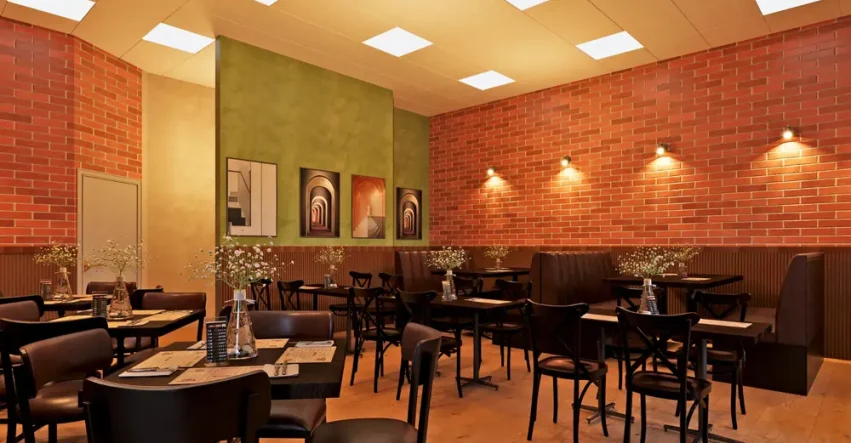
Speed, consistency, and comfort define the fast-food experience. In Florida those goals live inside a tougher context than most states. The climate is hot and humid for long stretches of the year. Afternoon storms create power quality events and short bursts of heavy rainfall. Coastal wind exposure and salt air attack equipment and exterior finishes. Local jurisdictions review drawings quickly but expect exact framing of codes and health requirements.
In this environment, InnoDez Florida focuses on measured outcomes. The guest path must be short, readable, and comfortable. The kitchen must be safe, compact, and free of backtracking. The drive-thru must keep cars off the street during peak periods. Mechanical, electrical, plumbing, structural, and life-safety decisions are coordinated from day one so drawings pass plan review the first time and contractors are not guessing in the field.
A fast-food, or quick-service, restaurant delivers prepared items rapidly with minimal table service. Orders come by counter, kiosk, drive-thru, or app. Menu clarity, queue design, line layout, ventilation, drainage, and finishes either support that promise or erode it. In Florida, humidity raises latent cooling loads, frequent door openings can pull moist air deep into the space, and wind design pressures affect openings and equipment tie-downs. Corrosion resistance shifts from a nice to have to a requirement at coastal and near-coastal sites.
Early alignment with the Florida Building Code helps avoid rework. See the state resource at floridabuilding.org. Kitchen ventilation should comply with best practice such as NFPA 96 for commercial cooking operations.
Most projects land inside one of a few patterns that pull different design choices to the top of the list.
There is no single perfect layout. There are plans that protect seconds and plans that waste them. Great outcomes start with a written, measurable brief and then push every discipline to defend that brief through value engineering and construction.
Link the physical environment to a precise business identity. If the brand speaks about crisp service and clean presentation, the plan should serve that idea. The queue from entry to counter should be direct, with menu legibility before guests reach the order point. View lines to the pickup shelf or window should be maintained from most seats so guests are confident about what happens next.
A one-page project promise helps. Name service time targets, drive-thru stacking, design indoor temperature and relative humidity, background sound level, lighting scenes for open, peak, clean-down, and night, and energy goals. Jurisdictions and landlords respond well when that clarity appears in the narrative and on the drawings. Contractors use it to make field choices without risking the core experience.
If you need integrated building-services support while defining that promise, see our Florida MEP Engineering and Structural Engineering pages for scope outlines and deliverable examples.
Treat flow like a conveyor that never stops. Receive and store food where trucks arrive without crossing guest paths. Dry storage, walk-in coolers, and freezers should sit a single push-cart trip from prep. Cold and hot prep must respect health codes while staying within reach of assembly. Expo belongs immediately adjacent to assembly with space for bagging, sauces, and quality check. Place a pickup shelf in a visible but controlled location that does not cut through the dine-in queue. Waste and chemical storage must be isolated, vented where required, and reachable from the exterior without crossing food zones.
Drive-thru design reduces or creates problems. Stacking must match the trade area and menu mix. Florida conditions push for covered order and payment windows, anti-slip surfaces, and shields that block wind-driven rain. Pavement should slope toward trench drains rather than toward the building. Provide a bypass lane where site size allows. Menu boards and speaker posts need power, data, and grounding in tidy conduits with corrosion resistance and wind anchors.
Kitchen ventilation determines comfort and utility cost. Hoods should be sized for the real line. Make-up air needs tempered supply to reduce drafts and latent load. Where outdoor air is very humid, a dedicated outdoor air unit with energy recovery and reheat can keep the dining room neutral to slightly positive while the cook line remains slightly negative. Commission the balance rather than guess. A few cfm too far in either direction shows up as doors that will not stay shut, hot staff, and condensation in the wrong places.
Plumbing is more than code minimum. Grease interceptors must match the menu and the local ordinance. Locate them for service without dragging hoses across customer areas. Provide floor sinks and trench drains where heavy cleaning happens. Domestic hot water should be right-sized with a clear temperature maintenance plan for multi-store owners.
Electrical systems benefit from a mission-critical mindset. Florida storms create sags and momentary outages. Service entrance surge protective devices and panel-level protection for sensitive loads reduce nuisance shutdowns. Distribute power so that key cooking stations, POS, and communications do not ride the same breaker. Provide spare capacity for future menu changes and label everything clearly at installation.
Guest comfort comes from small choices that add up. Vestibules and well-aimed grilles soften the temperature swing at doors. Menu boards should be readable from the back of the queue. Counters need durable tops, smooth bullnoses, and corner guards. Seating requires adequate knee clearance and respectful spacing. Floors must be slip-resistant and easy to clean. Wall finishes that resist scrubbing will look new longer and reduce repaint cycles.
Exteriors work when site circulation is obvious. Landscape islands and curb radii should guide drivers into the lane naturally. Canopies should cover the area where employees lean out the window and where guests pass payment. Impact-rated openings protect staff and reduce damage risk. Rooftop units need stands and curbs that meet wind pressures with flashing details that rely on continuous metal rather than exposed sealant.
Branding helps when it is consistent and legible. Use a restrained materials palette that performs across multiple stores. Repeat edge details, trim heights, accent colors, and wayfinding. Signage must satisfy landlord agreements and local ordinances while still reading at road approach speeds. Inside, the brand wall should be visible from most seats and the pickup shelf should look intentional rather than temporary.
Dining areas benefit from warm white LED with high color rendering where food is viewed. Counter lighting must make menu boards readable without glare. Simple scenes for open, peak, clean-down, and night keep staff from guessing and create an energy baseline. Exterior lighting should use full cutoff optics to avoid spill into residential areas while keeping the drive-thru bright and secure.
Acoustics often gets ignored then becomes costly to fix. Hard surfaces bounce sound. Maintain a comfortable background level and add absorption where needed. Ducts that run long and flat can boom; lining and proper hanger spacing reduce the issue. Place compressor racks and condensing units away from dining and away from neighboring property lines.
Power and data infrastructure should act like a backbone. Menu boards, kiosks, POS, printers, sensors, and cameras all need power and clean runs for signal. Provide pull strings to menu locations and a spare conduit from the building to the order point and sign. Those decisions save days during remodels and keep work tidy.
A Florida fast-food restaurant that runs well after opening day is the product of hundreds of deliberate choices made early and defended through construction. The guest path is short and obvious. The drive-thru stacks and drains properly. The kitchen line is compact and cool. Make-up air is tempered and balanced so humidity is controlled. Grease handling, hot water, and drainage are sized for the real menu and placed for easy service. Power is clean and labeled, data is routed without improvisation, and equipment is anchored to survive wind and salt. Interiors wash quickly yet still look good after a season of peak periods.
Need coordinated drawings that pass review the first time and build cleanly in the field? Explore recent work on our Florida Projects page, or start a brief on the Contact page. For code context, the Florida Building Code site and NFPA resources provide useful references.


