
- Mon-Fri 9am-5pm
- hello@innodez.com
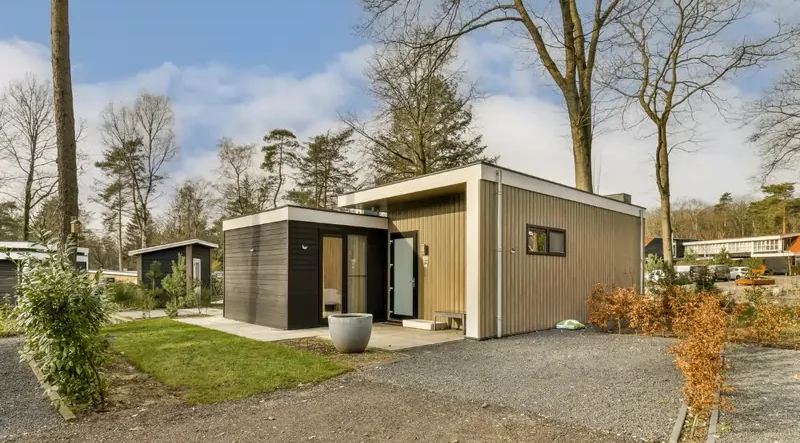
Accessory Dwelling Units—often called ADUs, guest houses, garage apartments, or backyard cottages—are growing fast across Florida. Whether you’re planning a rental, a place for extended family, or a home office with a legal kitchenette, an ADU can boost flexibility and long-term value. But Florida brings unique requirements: hurricane-wind design, floodplain rules, humidity control, and city-by-city zoning. This guide explains how to move from sketch to permit in plain language, with a focus on Florida Building Code and local practice.
An ADU is a self-contained residence on the same parcel as a primary dwelling. It has permanent provisions for living, sleeping, cooking, and sanitation. Florida jurisdictions allow several forms: a detached cottage in the rear yard; a garage conversion; a new unit over a garage; or an internal suite carved from the main house with a separate entrance. Local land-development codes set the rules on maximum size, height, setbacks, and whether short-term rentals are allowed.
Start with your city or county’s zoning map and text. Many Florida communities now permit ADUs in single-family zones, often with caps such as a maximum floor area ratio, a percentage of the main house, or a fixed square-footage limit. Rear and side setbacks usually mirror accessory-structure rules; corner lots can have special street-side setbacks. Height is commonly limited to match the primary house or a set number of stories. Some jurisdictions require owner-occupancy of either the main home or the ADU to discourage absentee short-term rentals. If you’re in a historic district, expect design review on massing, materials, and window patterns.
Florida wind speeds and exposure categories drive structural design. Coastal counties frequently require 150–180 mph ultimate wind speeds, while Miami-Dade and Broward impose High Velocity Hurricane Zone (HVHZ) standards with product approvals for openings and roof systems. If your lot touches a Special Flood Hazard Area, the finished floor of a new detached ADU must sit at or above the design flood elevation; enclosures below that level are restricted to flood-damage-resistant uses. For over-garage ADUs, verify existing slab and wall capacity, design hold-downs and collectors for lateral loads, and plan a clean load path so the new living space feels solid and quiet.
In mid-design, pairing structure with services saves rework. See how InnoDez Florida Structural Engineering handles wind, uplift, and flood detailing for small buildings. And explore InnoDez Florida MEP Engineering for compact, code-compliant systems that perform in humid climates.
ADUs can be sub-metered or fully separated from the main dwelling’s utilities. Electrical service should account for future EV charging, heat-pump HVAC, and electric water heating. Where allowed, dedicated meters simplify leasing and cost tracking; where not, branch sub-panels with clear labeling keep maintenance straightforward. For water and sewer, check with the local utility: some require new taps and impact fees; others allow tie-ins with backflow prevention and cleanouts placed for easy access. In septic areas, the system must be evaluated and potentially upsized.
Florida’s humidity calls for right-sized mechanical systems and real ventilation. Heat pumps with variable speed fans, sealed ductwork inside the conditioned envelope, and balanced or filtered-supply ventilation keep interior relative humidity in the 45–55% range. Bathroom and kitchen exhaust should vent outdoors with quiet, continuous-rated fans and backdraft dampers.
Some municipalities no longer require extra parking for ADUs near transit or within walkable districts; others ask for one off-street space. Confirm driveway widths, curb-cut limits, and turning radii before design is locked. Access and egress are safety priorities: provide a dedicated exterior door, emergency escape and rescue openings from sleeping areas, proper stair geometry for loft or over-garage designs, and interconnected smoke/CO alarms tied into the main panel where required. If the ADU shares walls with a garage, use fire-resistance-rated assemblies and self-closing, labeled doors.
Feasibility comes first: survey the lot, verify utilities, and check flood and tree constraints. Next, concept drawings establish massing, window placement, and how the ADU relates to the yard and the main home. Technical design adds structural calculations, MEP layouts, product approvals (NOA or Florida Product Approval numbers), and energy compliance. Submit a tidy permit set with plans, specs, and site drawings; many Florida jurisdictions accept electronic review. While the permit processes, finalize procurement for impact-rated windows, doors, and roofing. Once approved, foundations and utilities are inspected, framing and rough-ins follow, and final commissioning and documents (electrical, mechanical, blower door, and smoke alarm certificates) close out the job.
A small footprint thrives on daylight, storage, and privacy. Use shaded entries, deep eaves, and window placement that catches breezes while avoiding direct afternoon sun. Durable finishes—fiber-cement cladding, metal roofs with correct uplift ratings, and porcelain tile or luxury vinyl plank—stand up to sand, pets, and humidity. Consider porch screens, outdoor showers, and hose bibbs with vacuum breakers for easy upkeep. Thoughtful acoustics (resilient channels, dense insulation, and soft finishes) make compact rooms feel calm.
ADUs can be financed through construction loans, home-equity products, or cash-out refinancing. Ask lenders about rental-income underwriting policies; some will count a portion of projected rent. Insurance carriers typically require proof of permits, final inspections, and product approvals for wind and opening protection. For long-term operations, sub-metering utilities and using mini-split heat pumps with smart controls make expenses predictable; leak detection on water heaters and whole-home surge protection reduce unpleasant surprises.
Florida ADUs succeed when zoning is checked early, wind and flood demands are engineered into the bones, and compact MEP systems are sized for humidity as much as temperature. Keep drawings coordinated, specify impact-rated assemblies with real approval numbers, and plan for clean utility routing and service access. If you want a streamlined, code-ready process—from feasibility to final inspection—InnoDez Florida can deliver coordinated structural and MEP packages that read clearly at the permit counter and perform for tenants and family alike.
Explore recent small-building work on the InnoDez Florida Projects page. Ready to outline your site and timeline? Reach out via InnoDez Florida Contact.


